
Movement disorders are chronic, progressive disorders of the central nervous system. The Fogelson Neuroscience Center at Texas Health Dallas is dedicated to providing advanced therapy options, education and support services to patients with Parkinson’s disease and other movement disorders through physicians on the medical staff who specialize in the evaluation, diagnosis and treatment of Parkinson’s patients.
Types of Disorders
From the most common to the least, our movement disorders specialists are skilled in diagnosing and treating these degenerative neurological conditions, which include:
- Parkinson’s disease (PD)
- Essential tremor (ET)
- Dystonia
- Progressive supranuclear palsy (PSP)
- Multiple system atrophy (MSA)
- Corticobasal degeneration (CBD)
Therapies and Services
In addition to clinical treatment, patient education, and emotional support, individuals with movement disorders may benefit from the following services:
- LSVT® BIG and LSVT® LOUD
- Outpatient neurological rehabilitation
- Neuropsychology
- Neurosurgery
- Sleep medicine institute
- Specialty fitness classes geared for movement disorder patients
Technology Available
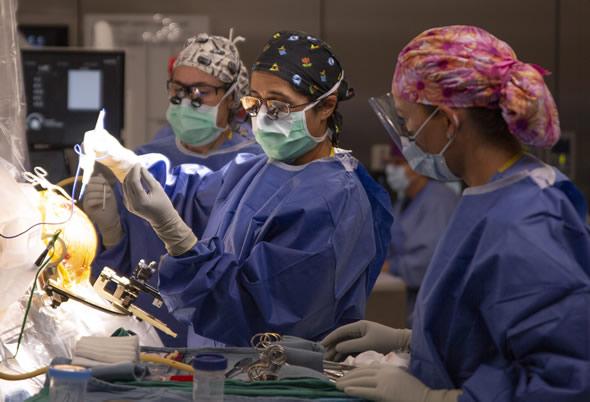
Deep Brain Stimulation (DBS) therapy involves the surgical implantation of a medical device, similar to a pacemaker for the treatment of Parkinson's disease. The device, which can be placed on either one or both sides of the brain, delivers electrical impulses to precisely targeted area of the brain. The subthalamic nucleus or STN is the precise area of the brain responsible for controlling movement and muscle function. Researchers now understand that continuous, high frequency stimulation of the STN blocks the signals that cause the undesirable motor symptoms (such as tremors) of Parkinson's disease.
Deep Brain Stimulation Therapy may be appropriate for Parkinson's disease patients who have significant daily living or functional impairment, develop dyskinesia (loss of control over voluntary movement), rigidity and/or have pronounced motor fluctuations. Parkinson's patients whose movement-related symptoms cannot be controlled by medication and/or experience intolerable side effects from medication may be candidates for DBS therapy.
Available to Help
The movement disorder center is focused on improving the patient’s overall quality of life by finding the optimal balance of medication, surgery, physical therapy and exercise, speech therapy, coping skills, and emotional support. We have staff available to assist you and help guide you through the process. This one on one care is essential in maintaining a high quality of life for individuals with movement disorders.
For more information, please call 214-345-5031. |