
Spring Allergies vs. Cold: How to Tell the Difference (And What to Do About It)

Quick Answer: Spring allergies and colds share similar symptoms, but allergies last weeks or months while colds typically resolve in 5-14 days. The key difference? Allergies cause itchy, watery eyes and no fever, while colds often come with body aches and fever. The good news: once you know which one you have, you can treat it effectively.
Key Takeaways:
- Allergies last weeks to months; colds resolve in 5-14 days
- Fever, body aches, and sore throat suggest a cold, not allergies
- Itchy/watery eyes and no fever are telltale allergy signs
- Over-the-counter antihistamines and nasal sprays treat allergies effectively
- Colds don't respond to antibiotics — rest and fluids are your best treatment
- This year's unseasonably warm winter means an early, intense allergy season in North Texas
- If symptoms last longer than two weeks, see your doctor
It's spring in North Texas, and if you're sneezing, congested, or feeling generally under the weather, you've got one burning question: Is this allergies or a cold?
Here's the thing — this year, that question has hit even earlier than usual. Thanks to our unseasonably warm winter, North Texas pollen counts are already climbing. Cedar, tree pollen, and grass allergens are arriving weeks ahead of schedule, which means allergy season is ramping up faster than in typical years. That warm winter also means less frost to kill off dormant allergens, so we may be dealing with higher pollen volumes throughout the season.
Whether it's allergies or a cold hitting you right now, knowing the difference matters because the treatment is completely different.
Know the Culprit
Allergies and colds might feel similar, but they start very differently in your body.
Allergies happen when your immune system overreacts to harmless substances like pollen, dust, or mold. Your body mistakenly identifies these as threats and releases chemicals called histamines to attack them. This causes the swelling, congestion, sneezing, and itchy, watery eyes you experience.
Colds are caused by viruses. When a virus enters your body (usually through contact with an infected person), your immune system fights back. The side effects of that fight — nasal congestion, runny nose, coughing, sneezing — feel a lot like allergies.
The catch? The symptoms overlap so much that it's easy to confuse the two.
Cold vs. Allergy: What's the Difference?
Here are the key differences to help you figure out what you're dealing with:
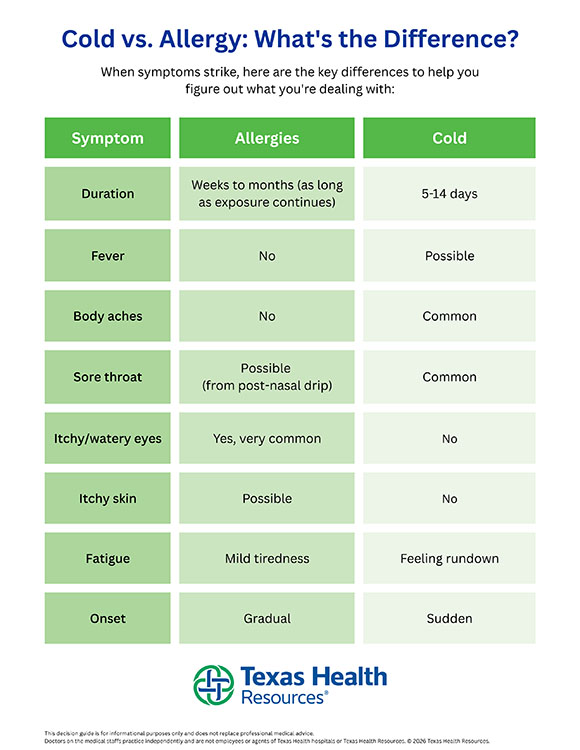
The biggest tip-off? If you still have symptoms after two weeks, it's probably allergies. Colds run their course in about 5-14 days maximum. If you're sneezing and congested beyond that timeframe, especially if you're not running a fever or feeling acutely sick, allergies are likely the culprit.
How to Treat Allergies
Once you've determined it's allergies, the goal is to reduce your immune system's overreaction. Here's what actually works:
Start with over-the-counter antihistamines. Your first line of defense should be a daily antihistamine like Claritin, Allegra, Xyzal, or Zyrtec (or their generic versions). These block histamine production and reduce symptoms over time. They work best when taken consistently, not just when symptoms flare.
Add a nasal steroid spray. If your symptoms are primarily nasal (congestion, runny nose, post-nasal drip, sneezing), a nasal steroid spray like Flonase, Nasonex, or Rhinocort targets the inflammation at the source. Pro tip: Don't sniff hard when using these sprays — you want the medication to sit in your nasal passages, not get inhaled down your throat where it won't help and tastes terrible.
Avoid common triggers. Check pollen forecasts, keep windows closed during high-pollen days, shower after being outside, and wear a mask if you're doing yard work. These steps reduce how much allergen your body has to fight.
When to escalate: If over-the-counter medications aren't cutting it after a week or two, or if you're dealing with year-round allergies on top of seasonal ones, talk to your doctor. You might benefit from prescription-strength options or allergy testing to identify exactly what you're allergic to.
How to Treat a Cold
Colds are viral, which means antibiotics won't help. But that doesn't mean you're stuck suffering. Here's what actually works:
Rest and fluids. This isn't just old-fashioned advice — it's the foundation of cold recovery. Your body needs energy to fight the virus, and staying hydrated helps loosen congestion and prevents secondary complications.
Over-the-counter symptom relief. Ibuprofen or Tylenol can reduce aches and fever. Decongestants can help with congestion, and cough suppressants or expectorants (depending on your cough type) may provide relief. Read labels carefully to avoid doubling up on ingredients.
Saline rinses. A saline nasal rinse can help clear congestion without medication and is safe to use frequently.
What doesn't work. Unfortunately, there's no magic cure for a cold. Most over-the-counter cold remedies only mask symptoms — they don't shorten the illness. Vitamin C, zinc, and other popular remedies haven't been proven effective once symptoms start.
When to See a Doctor
For allergies, see your doctor if:
- Over-the-counter medications aren't controlling symptoms
- Symptoms persist for more than a month despite treatment
- You suspect allergies are triggering sinus infections (recurring sinus infections at the same time each year is a red flag)
- You want allergy testing to identify specific triggers
For a cold, see your doctor if:
- You develop a high fever (over 103°F)
- You have severe symptoms like difficulty breathing or chest pain
- Symptoms don't improve after 10-14 days
- You develop signs of a secondary infection like facial pain/pressure or severe sinus symptoms
The Bottom Line
The good news? Whether it's allergies or a cold, you can manage it at home in most cases. The key is identifying which one you're dealing with so you treat it appropriately. And this year, given our warm winter and early pollen season, don't be surprised if spring allergies hit harder and sooner than usual.
Find a primary care doctor near you in communities throughout DFW, including Dallas, Fort Worth, Plano, Richardson, Prosper, Flower Mound, and beyond. Need care outside traditional office hours? Breeze Urgent Care centers are open 8 a.m. to 8 p.m., seven days a week.
Sources
- American Academy of Allergy, Asthma & Immunology. Allergic Rhinitis.
- Centers for Disease Control and Prevention. About Common Cold.
- Centers for Disease Control and Prevention. Manage Common Cold
- American College of Allergy, Asthma & Immunology. Seasonal Allergies: Symptoms and Causes.
- Mayo Clinic. Hay Fever Diagnosis and Treatment.
- American Lung Association. Asthma Basics.