
ARLINGTON, Texas — The call came in like any real emergency: EMS was transporting a visibly pregnant 30‑year‑old with a forehead injury after a crash. Conscious but unresponsive to commands, she arrived at Texas Health Arlington Memorial Hospital.
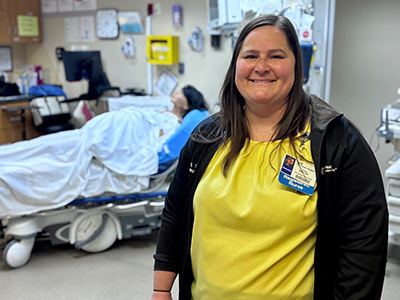
Joni Belz, D.N.P., R.N., CEN, TCRN, CAISS, NEA-BC
One obvious distinction, she was not a real patient but part of a hands‑on scenario using the hospital’s new maternal birthing simulator.
“It is a fully interactive learning tool that we’re excited to have in our facility to conduct simulation training for critical obstetric emergencies,” said Joni Belz, D.N.P., R.N., CEN, TCRN, CAISS, NEA-BC, director of Clinical Outcomes, Innovation, & Trauma Services at Texas Health Arlington Memorial. “Our high-fidelity simulators mimic the symptoms of real patients, providing an immersive training experience that mirrors bedside care.”
The maternal and birthing simulator is designed to cover the mother’s labor and delivery journey, from maternal initial assessment to postnatal care.
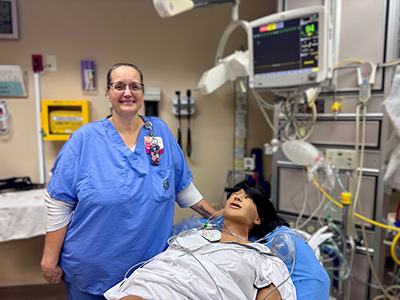
Anne Huth, B.S.N., RNC-OB
In February, Anne Huth, B.S.N., RNC-OB, nursing supervisor and maternal program coordinator at Texas Health Arlington Memorial, led a multidisciplinary maternal code simulation, bringing together medical staff physicians and care team members from the Emergency Department (ED), labor and delivery (L&D), the neonatal intensive care unit (NICU), trauma, respiratory therapy, EMS, pharmacy and chaplain services.
“While many pregnancies carry on without major complications, having a tool that enables us to practice prepares us for when emergencies occur,” said Huth. “Effective communication is imperative during a critical situation. Practicing clear communication in stressful situations prepares care teams for patient emergencies.”
The high-fidelity birthing simulator is a realistic training mannequin that recreates the experience of labor and delivery. It can simulate normal births as well as complications such as postpartum hemorrhage, and includes interactive features like contractions, bleeding, fetal heart sounds, breathing, and pulses to provide hands on, highly realistic training.
“Shoulder dystocia is another scenario we can cover, which is when a baby's shoulder becomes stuck during delivery. If the care team applies pressure in the wrong area, the simulator will not deliver the baby,” said Belz.
“Every mother deserves a safe birth experience, and this is another tool we use to help our care team feel comfortable to respond quickly, confidently and effectively to any situation,” said Shonna Bracco, D.N.P., M.S.H.A., R.N., NEA-BC, FACHE, chief nursing officer and professional services officer at Texas Health Arlington Memorial.
Related News
About Texas Health Resources
Texas Health Resources is a faith-based, nonprofit health system that cares for more patients in North Texas than any other provider. With a service area that consists of 16 counties and more than 8 million people, the system is committed to providing quality, coordinated care through its Texas Health Physicians Group and 29 hospital locations under the banners of Texas Health Presbyterian, Texas Health Arlington Memorial, Texas Health Harris Methodist and Texas Health Huguley. Texas Health access points and services, ranging from acute-care hospitals and trauma centers to outpatient facilities and home health and preventive services, provide the full continuum of care for all stages of life. The system has more than 4,400 licensed hospital beds, 6,400 physicians with active staff privileges and 30,000 employees. For more information about Texas Health, call 1-877-THR-WELL, or visit www.TexasHealth.org.